Investigative Reports: Environment and Human Rights

Investigative Reports: Environment and Human Rights

A compilation of selected investigative and interpretative reports on various environment and human rights issues.
2009, English, 438 pages, Paperback
2008, Bangla (Anushandhani Report: Paribesh O Manobadhikar), 418 pages, Paperback |
Tk.500 / US$20 

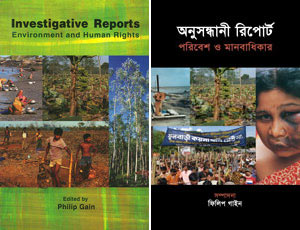
Investigative Reports: Environment and Human Rights (Anushandhani Report: Paribesh O Manobadhikar) is a compilation of selected investigative and interpretative reports on environment and human rights that SEHD has published in the press and its magazines Dharitri and Earth Touch.

The book contains reports on the Phulbari Coal Mine Project and different aspects of the controversial open-pit before and after the grassroots revolt in 2006.

Other reports are on the Modhupur Sal Forest, the third largest forest of Bangladesh and its inhabitants Garo and Koch indigenous communities. The reports present facts and analyses on monoculture plantations financed by external resources, the invasion of banana and pineapple gardens and the killing of some Garos.

The human rights abuses and environmental degradation in Adivasi inhabited areas in the CHT and the plains lands are also highlighted.

Reports on agriculture, industry, nature, forests, shrimp cultivation, fisheries, wetlands, destruction of the Sundarbans, natural disasters and foreign investment are included.

Another chapter contains reports on eviction of sex workers from red light locations and a report on rehabilitation issues of the affected and displaced people of the Jamuna multi-purpose bridge area.

Examination of the fifth, the seventh and the eighth parliament seasons is covered, which will help readers understand the democratization processes and the lawmakers of the country.

This book is intended for use by newspapers, universities, human rights activists, researchers, students and anyone interested in in-depth analyses of some of the key environmental, human rights, and ethnic issues in Bangladesh.

Publication Details

English: 2009
Paperback
: 388 pages
Bangla: 2008
Paperback: 418 pages
Editor: Philip Gain
Price: Tk.500 / US$20
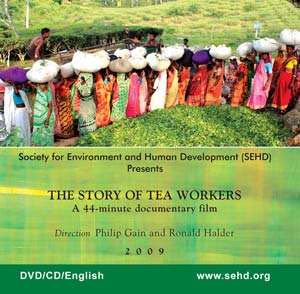
The Story of Tea Workers – Documentary 

The Story of Tea Workers – Documentary 

The life, grim work conditions, and struggle of the indentured tea plantation workers of Bangladesh. 2009, English and Bangla, 44 mins. DVD Tk.200 / US$ 10 | CD Tk.100 / US$5

The Story of Tea Workers, a 44-minute documentary film, shows the life, grim work conditions, and struggle of the indentured tea plantation workers. One of the most marginalized and excluded community of Bangladesh, the tea plantation workers have remained captive in the tea estates since they were brought by the British companies more than 150 years ago. The film is factual and thought provoking.

Publication Details

Published: 2009
Language: English and Bangla
Length: 44 minutes
Director: Philip Gain and Ronald Halder
DVD: Tk.200 / US$10
CD: Tk.100 / US$5

The Story of Tea Workers – Exhibition 

The Story of Tea Workers – Exhibition 

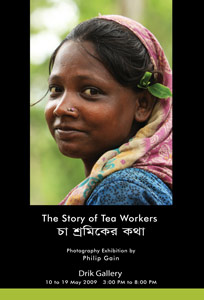
The Story of Tea Workers photography exhibition, a look into the injustices in the labour lines.
2009, Catalogue English | Tk.50 / US$2

The Story of Tea Workers photography exhibition depicts the life of the tea plantation workers at a time when the government is showing the country a dream of digital Bangladesh and changes in the lives of poor, marginal and Adivasis.

The tea communities are one of the most vulnerable people of Bangladesh. They deserve special attention of the State, not just equal treatment. Unfortunately they continue to remain socially excluded, low paid, overwhelmingly illiterate, deprived and disconnected. They have also lost their original languages in most parts, culture, history, education, knowledge and unity.

Exhibition Details

Exhibition: 2009
Catalogue: English
Photographer: Philip Gain
Price: Tk.50 / US$2

Jibon

Jibon

The bulletin of the Bangladesh Water and Food Security Partnership (BWFSP), a coalition of six Bangladeshi NGOs.
From 2009, English and Bangla, Magazine

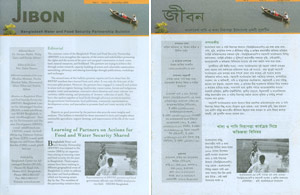
Jibon, or life in English, is a bulletin of the Bangladesh Water and Food Security Partnership (BWFSP), a coalition of six Bangladeshi NGOs which all partner with the Dutch donor agency ICCO. The bulletin, which is published both in English and Bangla, deals with food security and water issues in Bangladesh but the content mainly covers the activities of the partnership and individual members.

Magazine Details

Published From: 2009
Language: English and Bangla
Magazine: Various

The Story of Tea Workers in Bangladesh 

The Story of Tea Workers in Bangladesh 

Issues relating to the tea plantation workers and how the tea industry is run. 2009, Paperback – English, 303 pages 
Bangla (Cha Sramiker Katha), 334 pages | Tk.300 / US$15

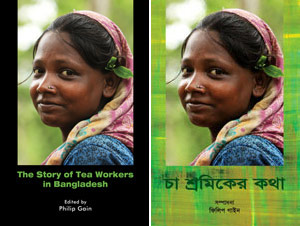
This book is about the tea plantation workers in Bangladesh. However, the genesis of tea cultivation in what is now Bangladesh, its growth, ownership, rights of the tea workers and their struggle for legitimate demands, the use of land granted for tea cultivation and different trends have also been featured to help understand the conditions in which the indentured tea plantation workers have been confined.

The first commercial-scale tea garden in Bangladesh was established in 1854. Now the country has 156 tea gardens (excluding seven in the North Bengal) with more than 118,000 tea workers. The laborers who keep the tea industry alive are not locals. The British companies brought them from different States of India about 150 years back. These workers belonging to many ethnic identities cleared jungles, planted and tended tea saplings, planted shade trees, and built luxurious bungalows for the tea planters. But they had their destiny tied to their huts in the ‘labor lines’ that they built themselves. They continue to remain as people without choice and entitlement to property.

Living conditions in the labor lines of the tea gardens are generally unsatisfactory. Typically a single room is crowded with people of different ages of a family. Cattle and human beings are often seen living together in the same house or room.

The wages of the tea plantation workers of Bangladesh is another concern. They get much lower wages than the Indian tea workers. The work condition of the tea plantation workers is not satisfactory. They are socially excluded, overwhelmingly illiterate, deprived and disconnected. They have also lost their languages and cultures.

“The Story of Tea Workers in Bangladesh” is a book for a wide range of users and actors who want to understand the issues relating to the tea plantation workers and how the tea industry is run. In addition to information, insights and views about the conditions of the tea plantation workers, one will also find significant literature review and guidance to web resources on tea; useful addresses of concerned actors and institutions; laws relating to tea industry and tea workers; a glossary on the tea industry and the tea plantation workers; the demands of the tea workers and the memorandum of understanding; addresses of all the tea estates with some basic information, etc.

Publication Details

Published: 2009
English: 303 pages, Paperback
Bangla: 334 pages, Paperback
Editor: Philip Gain
Price: Tk.300 US$15