

Justice Haibibur Rahman on Speedy Supply of Energy and Power Bill 2010

Justice Haibibur Rahman on Speedy Supply of Energy and Power Bill 2010

Former Chief Justice and Chief Advisor of the caretaker government Habibur Rahman has criticized the “Speedy Supply of Power and Energy (Special Provision) Bill, 2010” that was passed by the parliament on 3 October 2010. The law provides egalitarian authority to the government to take quick and effective actions for exploration, supply, distribution, transmission, transportation, and marketing of power and energy.

Justice Habibur Rahman spoke on this law at the launching of a report “The State of Governance in Bangladesh 2009”, published by Institute of Good Governance (IGS) of Brac University on 6 October 2010. His contention as reported by the press is that the law stands in the way of the people’s right to get justice from the judiciary. Referring to section 9 of the bill, Justice Rahman said that no question can be raised in the court about the legitimacy of measures, decisions, and actions taken under this law by the executive with regard to power and energy. Officials or employees acting in good faith to implement the law cannot be brought to justice.

This special law remains effective for two years unless extended or scrapped.

Transparency International Bangladesh (TIB) concurred with Justice Rahman and expressed concern about the law in a statement on 4 October 2010. It called for its withdrawal in the interest of transparency and accountability of the power sector.
Justice Haibibur Rahman on Speedy Supply of Energy and Power Bill 2010

Presidential Pardon of 20 of Prisoners on Death Row

On 7 September 2010, President Zillur Rahman pardoned 20 prisoners who had been sentenced to death. Amnesty International (AI) took this occasion to argue for the pardon of the over 1,000 prisoners remaining on death row in Bangladesh. AI explains how the sentencing of these 20 prisoners (accused of involvement in the death of a Bangladesh Nationalist Party activist) was illegitimate as the victim was an advocate for the party (the BNP) that was in power at the time. Concurrently AI considers that the pardoning of these prisoners is strictly political as it seems that all 20 prisoners are supporters of the current ruling party, the Awami League.

AI has serious issue with the political controversy surrounding the trial and pardon of these prisoners as it infers that some death row inmates may be denied valid pardons for political reasons. Furthermore, AI states that the death penalty violates the Universal Declaration of Human Rights.

As a result AI petitioned the President of Bangladesh to impose a moratorium on all executions in Bangladesh citing that it would be in line with a UN resolution that received majority support within the UN. These are attempts by AI to appeal to President Rahman based on his ability to garner international political support by bringing Bangladesh in line with AI’s belief that the death penalty, regardless of the reason, is cruel and inhuman. AI wants President Zillur Rahman to not only pardon and commute the sentences of current death row convicts, as well as impose a moratorium on future death sentences, but also re-open the investigation of the murder for which the original 20 prisoners were convicted.

The Story of Tea Workers Book Launched

The Story of Tea Workers Book Launched

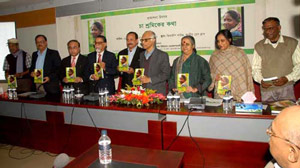
Prof. Wahiduddin Mahmud, eminent economist and chief guest, formally launched the book at the VIP lounge of the National Press Club in Dhaka. In his introductory note Philip Gain, SEHD director and editor of the book, reflected on the challenging task of producing the book, a 44-minute documentary film and a photography exhibition.

Prof. Wahiduddin Mahmud, eminent economist and chief guest formally launched the book at the VIP lounge of the National Press Club in Dhaka. In his introductory note Philip Gain, SEHD director and editor of the book, reflected on the challenging task of producing the book, a 44-minute documentary film and a photography exhibition.

Presided by SEHD chairman Professor Sakhawat Ali Khan, designated speakers who spoke at the discussion on the book and issues covered in it were Khushi Kabir, Prof. Amena Mohsin, cairman of the Minimum Wages Board,Ikteder Ahmed, member of Bangladesh Tea Association (BTA, organization of the tea estate owners) M Shah Alam, Adivasi leader Gidison Pradhan Suchiang, labor leaders Tapan Datta and Rambhajan Koiri.

Representatives from government and non-government organizations, tea workers, researchers, students, and journalists attended the launch.

The book, Story of the Tea Workers (Cha Sramiker Katha), is about the indentured tea plantation workers, one of the most marginalized and excluded communities of Bangladesh. The issues covered in this book include the history of the tea industry, the ownership of tea estates, socio-economic status of tea workers, their struggle for rights, their health and education status and laws relating to tea industry among others. In addition to information and analysis that is the result of years of investigation by SEHD staff, the book contains insightful write-ups tea industry by labor leaders, lawyers, physicians and government officials.

Justice Haibibur Rahman on Speedy Supply of Energy and Power Bill 2010

New Minimum Wage for Bangladeshi Garment Workers

The Minimum Wage Board, a Bangladesh Government institution that oversees the wages of industrial workers, announced on 29 July 2010 that the monthly minimum wage (at entry level) for workers in the readymade garments industry (RMG) would be raised from Tk.1,662.50 (in effect since November 2006) to Tk.3,000. This breaks down to Tk.2,000 for basic needs, Tk.800 for rent, and a medical allowance of Tk.200 and is effective as of as of 1 November 2010.

The garments industry is the top earner in foreign exchanges and accounts for well over 75% of the total exports from Bangladesh. According to the Export Promotion Bureau (EPB) Bangladesh earned $12.59 billion from exports of garments during the 2009-2010 fiscal year. The industry employs 3.5 million workers, the majority of which come from low-income families and rural areas.

The minimum wage that was fixed at the behest of the prime minister of Bangladesh did not satisfy the workers who demanded Tk.5,000. The workers went on a rampage through the streets in different parts of Dhaka City, Narayanganj, and Gazipur (three major centers of the garment industry) to protest against the announced minimum wage.

Garment Sramik Sangram Parishad (Garments Workers’ Movement Council) rejected the minimum wage and supported the workers demands. However the workers and their bargaining agents ultimately accepted the minimum wage that the government chose.

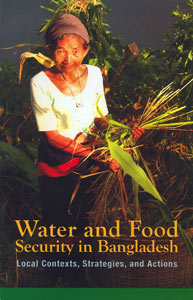
Water and Food Security in Bangladesh: Local Contexts, Strategies and Actions

Water and Food Security in Bangladesh: Local Contexts, Strategies and Actions

This publication introduces the coalition, Bangladesh Water and Food Security Partnership (BWFSP) and its activities. The coalition is comprised of six Bangladeshi non-government organizations that all partner with ICCO, a Dutch development agency. Each of the BWFSP members has its unique work area, but the issues they address are inter-related.

Six organizations and their issues as part of the partnership programs are:
BCAS – promoting the role of the poor women in coping with the drinking water crisis in drought prone villages in its work area in Rajshahi District.
RDRS – introducing pariza rice contributing to food security.
UST – contributing to food security through organic farming that reinforces the significance of saving nature by avoiding chemical fertilizers and pesticides.
UBINIG – focusing on biodiversity-based ecological agriculture for water and food sovereignty of the people.
SEHD – exposing the underlying factors for the destruction of the Modhupur sal forest, promoting the rights of the indigenous peoples to land and forests, and engaging the indigenous communities in ecological farming.
GBK – promoting and engaging in simple cost effective economic activity through rabbit culture that helps the poor by increasing their income

The write-ups are telling of a commitment that these organizations make towards securing access of the poor, marginal and indigenous communities to food and water. This is a difficult commitment to fulfil in Bangladesh, a country of around 164 million people with approximately 40% poor and 20 extremely poor. These realities make it obvious that development actors, government, donor communities and the common man must work hand in hand.

Publication Details

Published: 2010
Language: English
Paperback: 66 pages
Editor: Philip Gain
Price: Tk.100 / US$3

Introducing the Bangladesh Water and Food Security Partnership coalition, its members and activities. 2010, English, 66 pages, Paperback – Tk.100 / US$3