Sep 16, 2021 | Adivasis and Forests
Compiles information and insights presented at a national seminar on forest, forest people and forest culture.
1996, Bangla, 76 pages, Photocopy only | Tk.100 / US$5
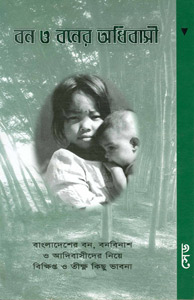
Bon O Boner Adhibasi (Forest and Forest People) is a booklet that compiles information and insights presented at a national seminar on forest, forest people and forest culture held in 1994. Adivasis, environmentalists, activists, politicians, academics, etc. attended the seminar. SEHD presented its findings of investigation and action-oriented research on critical concerns in the public forestland. Issues concerning commercial and industrial plantations were also discussed at the seminar.
The participants insisted that the Adivasis are the true custodians of forest and biodiversity, but instead of getting protection, they face consistent harassment and false cases. They also have been progressively losing their customary land rights and access to forest resources.
Published: 1996
Language: English
Photocopy only: 66 pages
Editor: Philip Gain and Shishir Moral
Price: Tk.100 / US$5
May 24, 2021 | News Reports
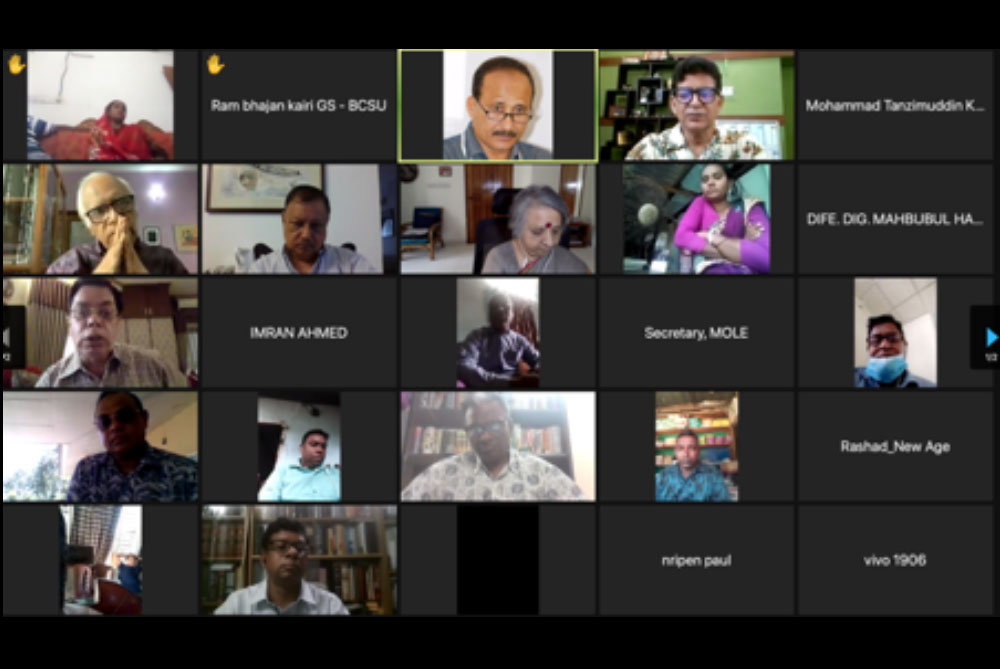
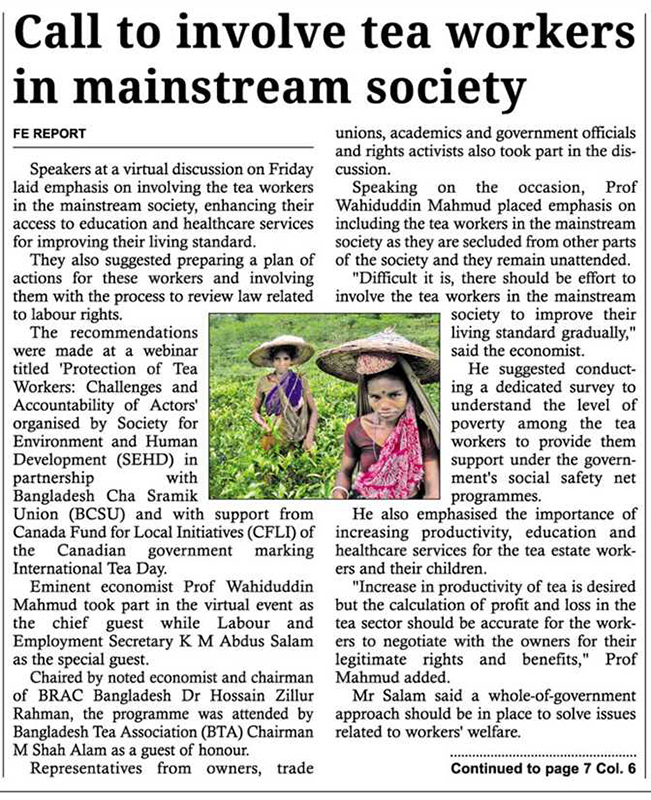
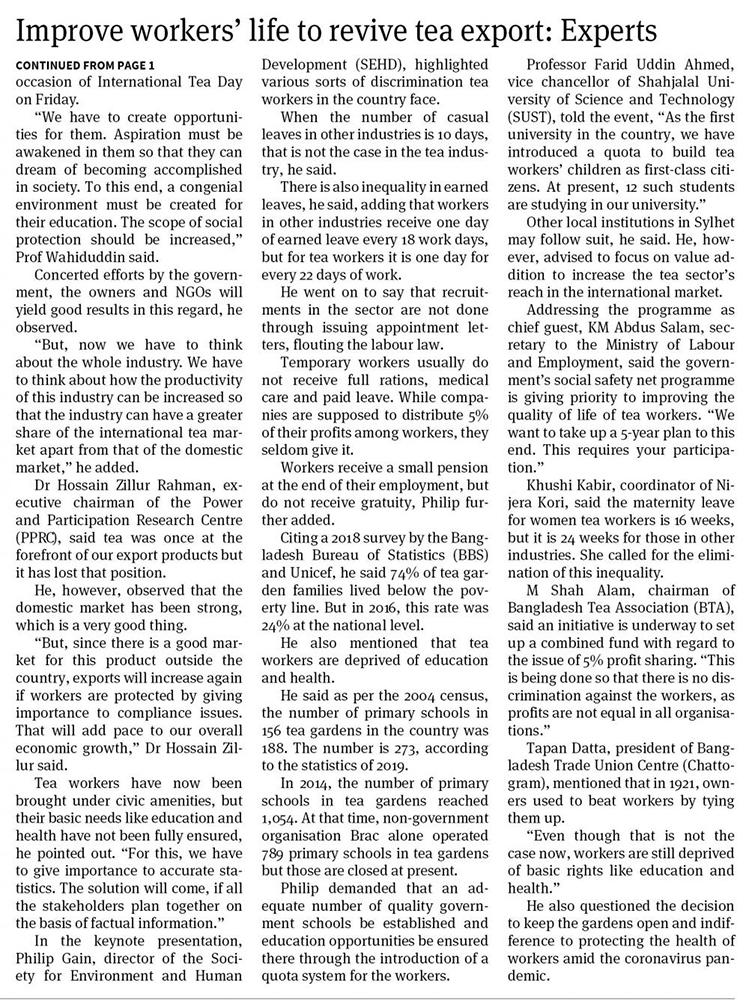
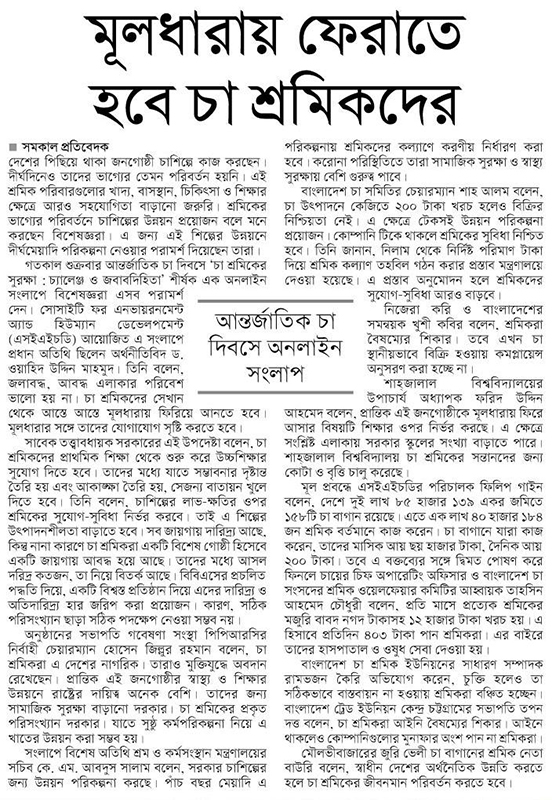
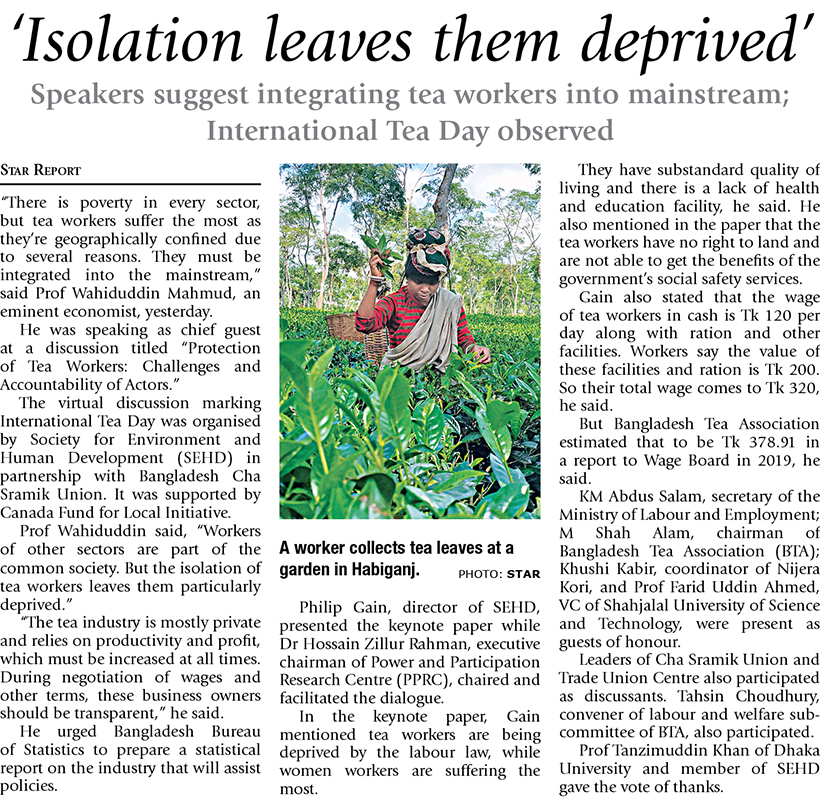
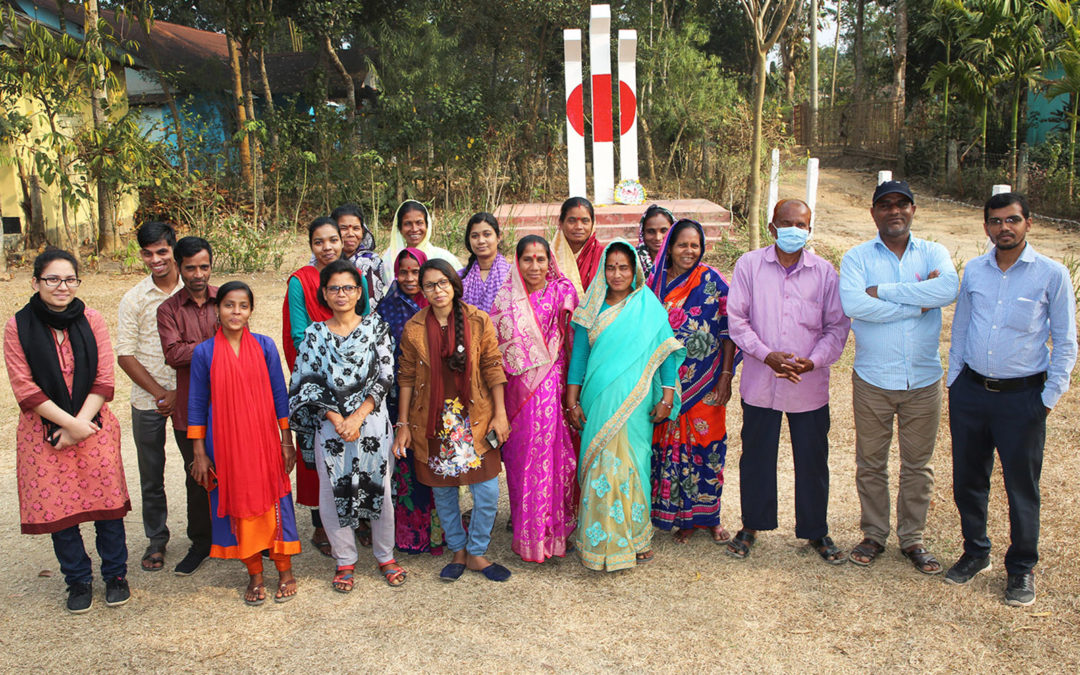
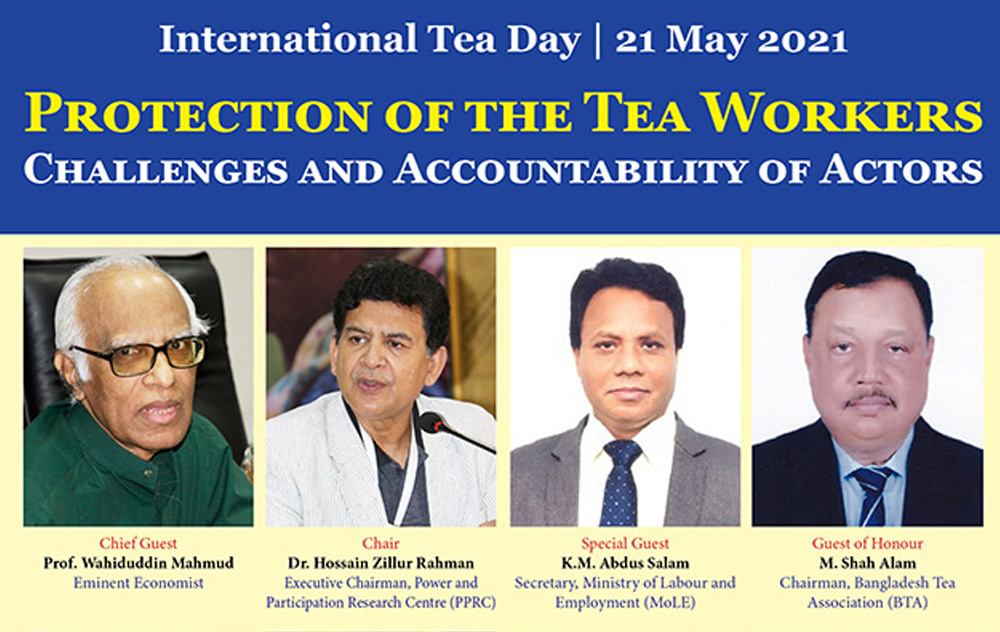
A virtual dialogue, titled, ‘Protection of the Tea Workers: Challenges and Accountability of Actors’ organized by Society for Environment and Human Development (SEHD) in partnership with Bangladesh Cha Sramik Union and with support from Canada Fund for Local Initiatives (CFLI) of the Canadian Government was held on 21 May 2021, the International Tea Day.
“The tea workers are tied to the tea gardens. They are in a very sorry state and socially excluded. Education can play a significant role in gradually freeing them.” Prof. Wahiduddin Mahmud, an eminent economist, said this as the chief guest in a dialogue on “Protection of Tea Workers: Challenges and Accountability of Actors”. Dr. Hossain Zillur Rahman chaired and facilitated the dialogue.
The virtual dialogue organized by Society for Environment and Human Development (SEHD) today (21 May), the International Tea Day, brought together representatives of Bangladesh Cha Sramik Union (BCSU) and Bangladesh Tea Association (BTA), academics, trade union leaders, government officials and rights activists.
The International Tea Day is a reminder of the long history and the deep cultural and economic significance of tea around the world. The day aims at promoting sustainable production of tea and its consumption and raising awareness of its importance in fighting hunger and poverty.
“Increase in productivity of tea is desired, but the calculation of profit and loss in the tea sector should be accurate for the workers to negotiate with the owners for their legitimate rights and benefits” added Prof. Mahmud.
The secretary of the Ministry of Labour and Employment (MOLE), K.M. Abdus Salam, the special chief guest at the dialogue informed that there are 63.5 million workers in Bangladesh including the tea workers (140,000). “Their social protection is among the top priorities of the government,” said the secretary. “We want to adopt a five-year plan to assist tea workers in all possible ways and SEHD can help us in this respect.”
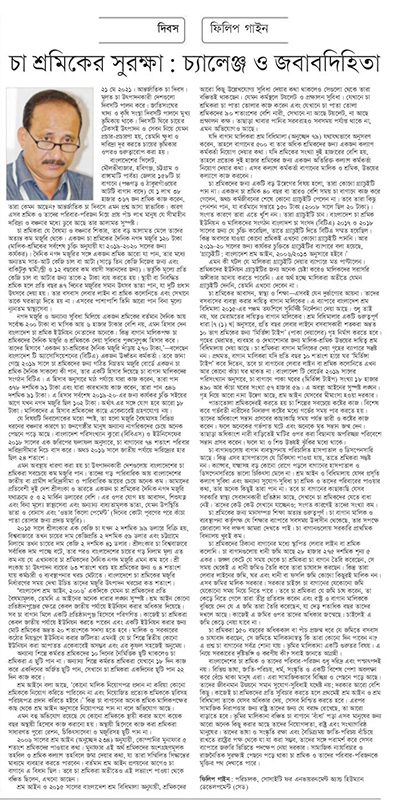
The dialogue involved the representatives of BCSU, BTA and others based information, insights and analysis that Philip Gain, researcher and director of SEHD presented in his keynote paper, “Protection of Tea Workers: Challenges and Accountability”. The keynote paper has focused on the poor condition of the non-Bengali tea workers, tied to the tea gardens; low wages and meager fringe benefits; non-compliance with the labour law and labour standard and discrimination in the labour law; inequality and violence against women; misfortune with accommodation, health and education; complete landlessness of tea workers; and their social protection.
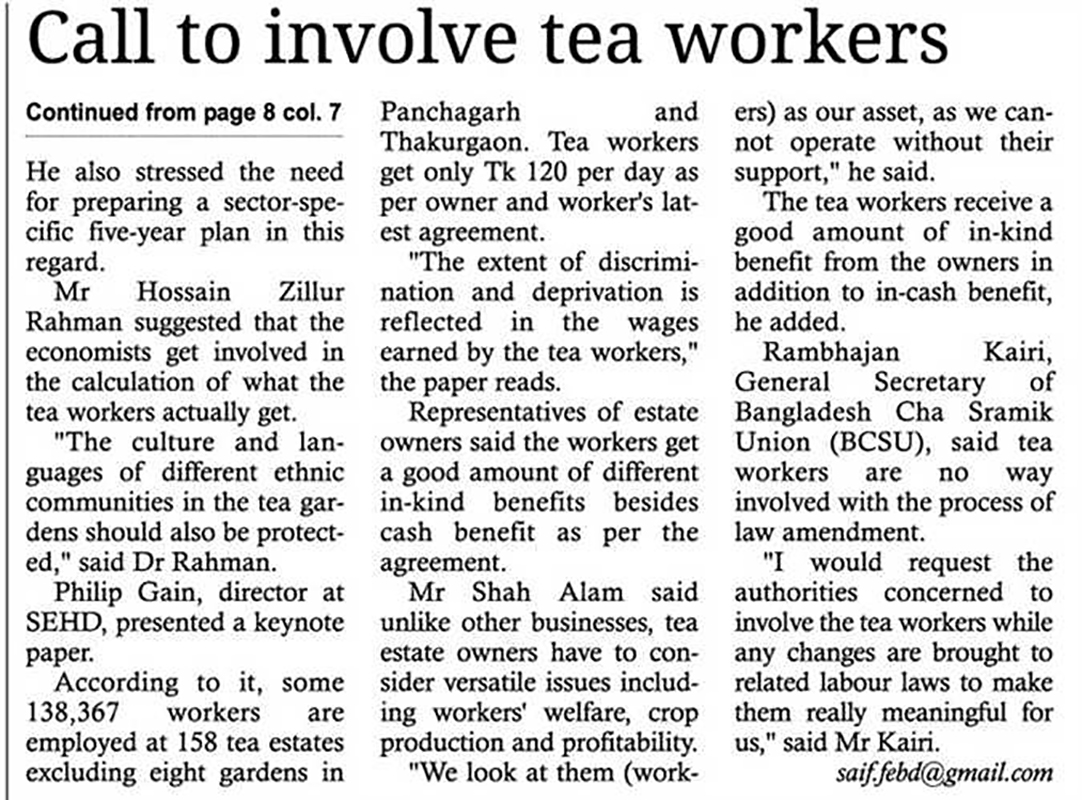
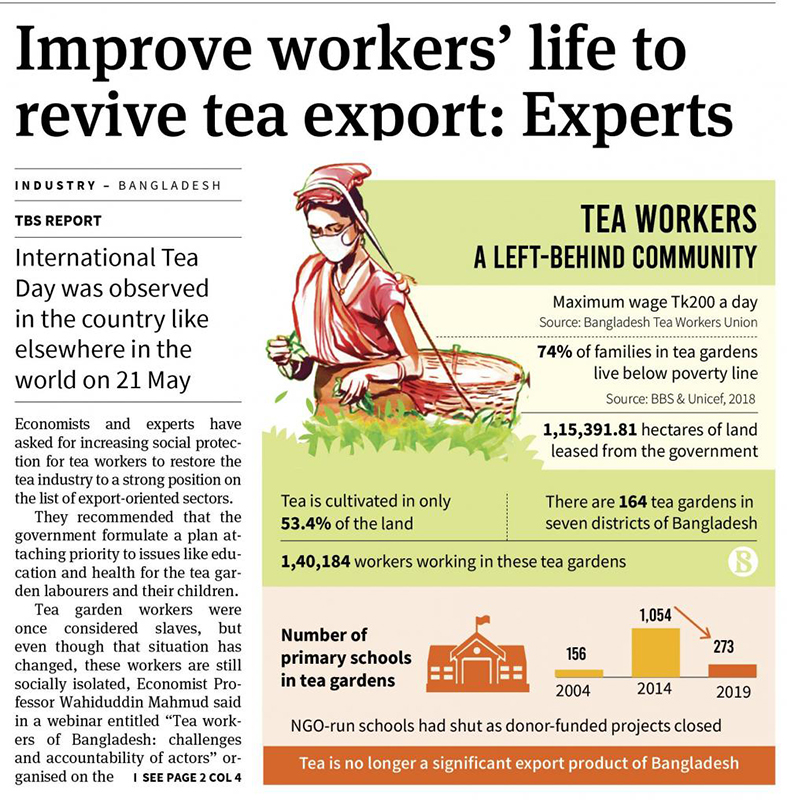
While the labour leaders Rambhajan Kairi and Tapan Datta argued strongly in support of the keynote paper and elaborated on the deprivation of the tea workers, Tahsin Ahmed Choudhury and M. Shah Alam, leaders of Bangladesh Tea Association (BTA) presented the owners view. One highly disputed issue was the wages that are paid to the tea workers. The labour leaders rejected the calculation of the owners that cash pay and other benefits paid to a worker a day amounts to Tk.400. They strongly argued that a worker gets hardly Tk.200 a day.
Dr. Hossain Zillur Rahman, a well-known economist and researcher on poverty suggested that the economists should get involved in calculation of what the tea workers actually get. “The culture and languages of different ethnic communities in the tea gardens should also be protected,” said Dr. Rahman.
Others who spoke at the dialogue included Sreemati Bauri, Juri Valley, Moulvibazar; Khushi Kabir, Coordinator, Nijera Kori & Bangladesh coordinator, One Billing Rising; Prof. Farid Uddin Ahmed, Vice Chancellor, Shahjalal University of Science and Technology (SUST) and Prof. Tanzimuddin Khan, University of Dhaka.
Facebook link to the dialogue: https://fb.watch/5De9nCcgCN/
NEWS COVERAGE ON THIS EVENT (PDF)
—–
1. Financial Express.22 May 2021
2. Business Standard. 22 May 2021
3. The Daily Star. 22 May 2021
4. Prothom Alo. 22 May 2021
5. Bonik Barta-Report on dialogue
6. Bonik Barta-Op-Ed.Philip Gain
7. Samakal report