
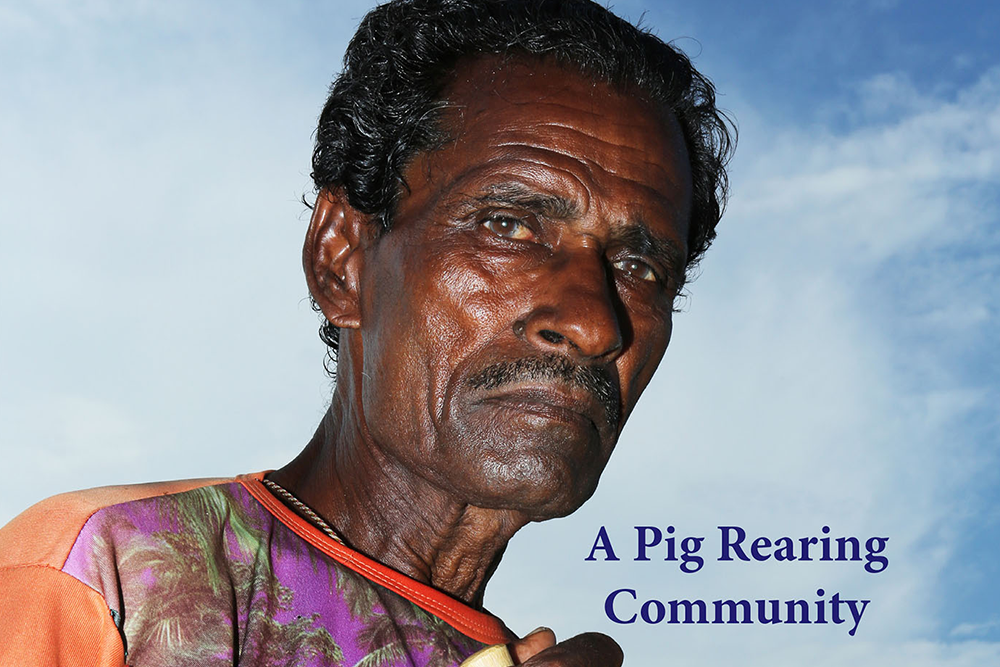
Kaiputra: A Pig Rearing Community
By Philip Gain and Sabrina Miti Gain
Photography: Philip Gain
Published by Society for Environment and Human Development (SEHD)
Published 2019, English, PBK, 80 page
Tk.100/US$5
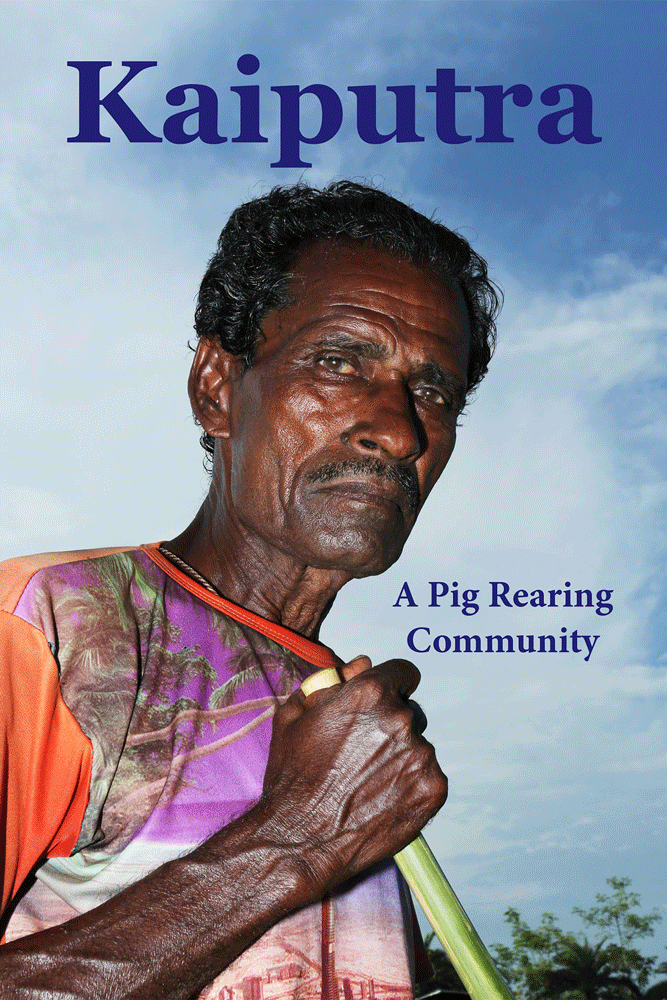 The Kaiputra is a small pig rearing community concentrated in 41 villages in the South-western districts of Jashore, Satkhira and Khulna. Their guesstimated population is 12,000. The Kaiputras, basically Hindus, are generally despised in the society because they rear pigs, an animal ‘filthy’ to the Muslim majority. Many consider them as ‘untouchables’.
No matter wherever you see a herd of black swine in the open field of Bangladesh, which may not be owned by someone from the Kaiputra community, the rakhals (herders) in almost all cases are sure to come from the Kaiputra villages in Jashore, Satkhira and Khulna districts. The rakhals are the ones who perform the most difficult job to manage the herds of pigs in the open fields. Unlike any other job, they spend day and night in rains and cold and under the scorching sun in the open field to feed the pigs. They must also guard the pigs while feeding or sleeping.
People in general are taken aback or amused when they see a herd of pigs feeding in the open fields, road side or en route from one place to another. But there is little research attention or interest to this tiny community that remains mostly invisible. This monograph compiles fresh finds from a study and investigation into the life and struggle of the Kaiputras in the open fields where they raise pigs and in their villages. The Kaiputras are poor, indebted and burdened with social stigma attached with rearing pigs. All these factors keep them falling behind in education and exploring alternative employment.
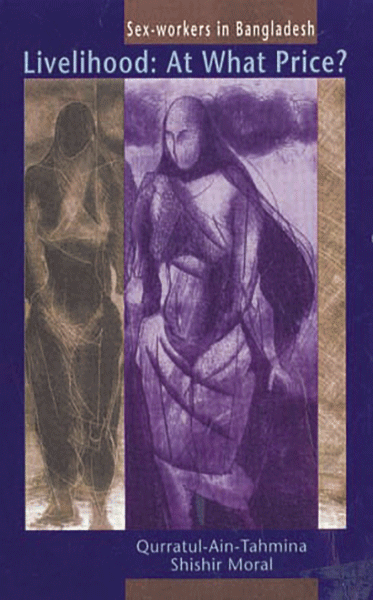 Sex work remains to be a disgraceful choice in our society and women engaged in this work are defined by abusive terms, all meaning that a sex worker is a “fallen woman”. Different sources estimate the sex-workers in Bangladesh at about 60,000 (as of 2004). They work in brothels, hotels and on the streets. However, these numbers exclude those who work in the residential areas and are better off. Children constitute a significant percentage of the sex-workers. The organized sex trade gangs, poverty, oppression by husband and other family members, temptation for jobs, etc. compel most of the sex-workers into this profession.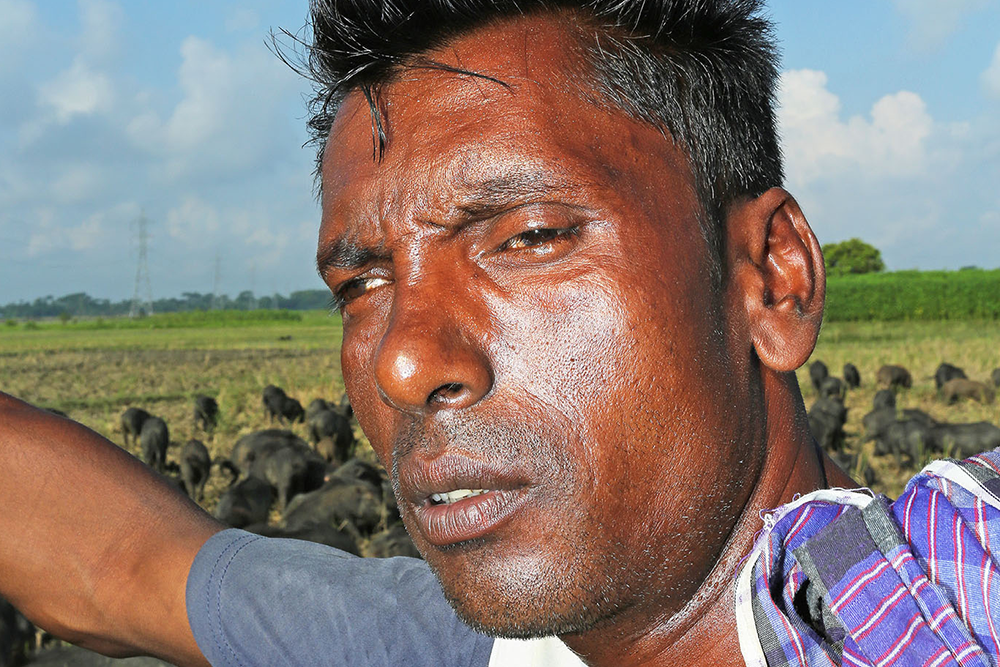
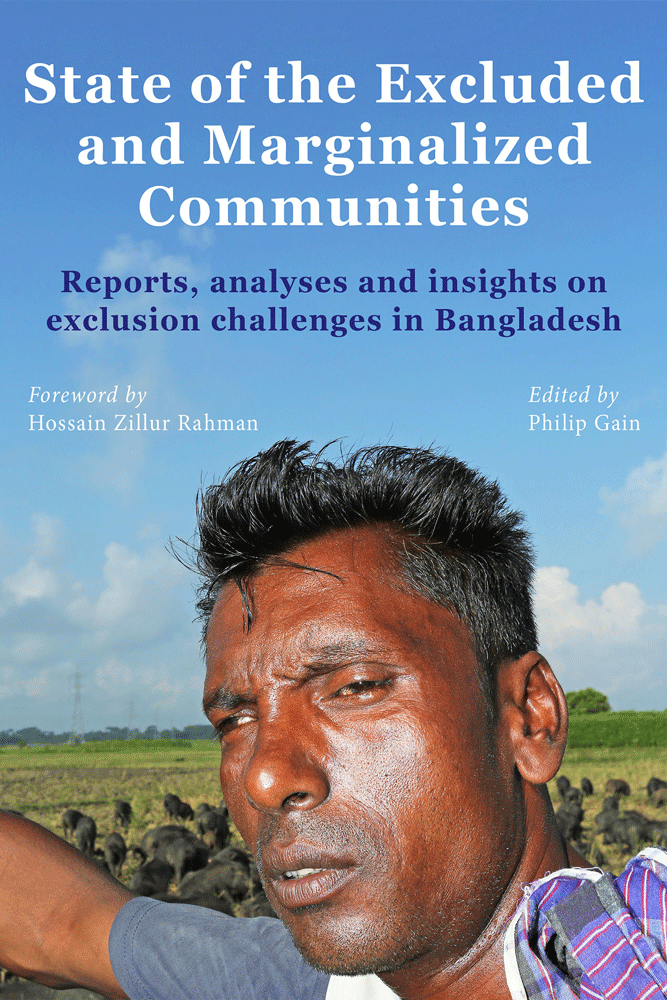 This is an analytical report on the state of the excluded and marginalized communities of Bangladesh—ethnic communities, tea workers, Bede, Rishi, Harijan, Jaladas, sex workers, Kaiputra (pig rearing community) and Biharis. These communities constitute around three percent of the population of Bangladesh. They face discrimination and exclusion—socially, economically and politically—for various reasons such as their ethnic identity, situations close to slavery, occupation, casteism, culture, geographical location, landlessness and eviction from their land.